
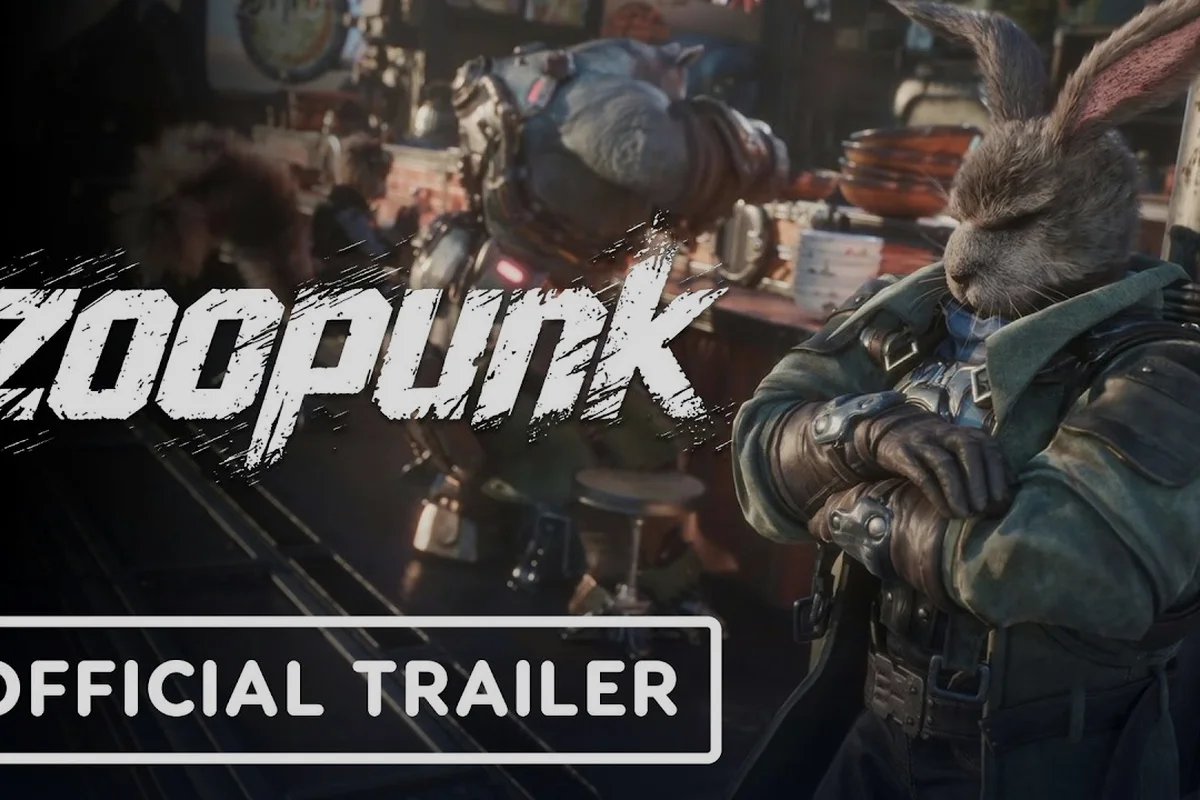
Zoopunk cutscenes are doing the heavy narrative lifting before the game even ships, and fans keep pausing the same frames to ask what the visuals actually mean. With two official trailers already in circulation, every animal-punk frame has become a clue worth decoding, which is why a clear zoopunk cutscenes explained walkthrough matters right now.
The Two Trailers That Set the Zoopunk Cinematic Language
Before you can decode any specific cutscene beat, it helps to know which footage the community is actually pulling from. The two trailers run at very different tempos, but together they form a single visual vocabulary for the war between the animal survivors and the mechanoid empire.
Announcement Trailer — The Fable of Awakening
The original announcement cut leans fully on visual storytelling, dropping the player into a wasteland fable with no voiceover to lean on. According to community dissections, it is structured as a three-act fable: survival, memory, and awakening. You see rusted idols of a fallen age, the debris of a forgotten machine uprising, and finally Rayton, the hound-like protagonist, quietly vowing to push back.
That vow lands because the trailer earns it. The first half is a long, almost wordless crawl through wreckage: hollow-eyed animal civilians, gutted propaganda murals, and a sky that never stops raining ash. When Rayton finally steps forward and the camera tightens on his eye, viewers are reading his expression for confirmation that the fable is shifting from passivity to resistance.
gamescom ONL Trailer — The Chapter Card Pattern
The newer ONL cutscene, as shown on the gamescom ONL 2026 trailer, is closer to a campaign roadmap than a single fable. It strings together four discrete beats: mechanoid columns advancing under storm skies, animal civilians sheltering in the ruins, the trio assembling, and finally a closing card that reads Break the Limits. The journey continues. Each beat reads less like one story scene and more like a chapter title for the multi-front war, which is why the zoopunk announcement trailer meaning debate keeps coming back to structure.
For a side-by-side look at how both trailers stack up against each other, the Zoopunk reveal trailer YouTube companion piece is a useful reference — it lines up the gamescom ONL chapter card pattern against the earlier "every modification is an act of defiance" montage, and the original Fist of the North Star review-page breakdown of the 2024 teaser, making the zoopunk story themes and chapter reveals easier to follow visually.
| Beat | Announcement Trailer | gamescom ONL Trailer |
|---|---|---|
| Opening mood | Silent, ash-falling fable | Stormy, militarized advance |
| Protagonist focus | Rayton's vow | Rayton, Braton, and Trixie assembling |
| Enemy presence | Implied via rusted idols | Active mechanoid columns onscreen |
| Voiceover | None | Minimal, layered over music |
| Closing card | Awakening motif | "Break the Limits. The journey continues." |
| Story function | Establishes the war's origin | Maps the war's first three chapters |
The comparison matters because zoopunk cutscenes explained discussions tend to treat both trailers as one continuous movie. They are not. The announcement establishes why the war exists, and the ONL cut tells us how the trio plans to fight it across multiple fronts.
Decoding the Gear-Heart Symbol Across Every Cutscene
The single most-discussed visual element across both trailers is the recurring gear-heart iconography, and rightly so, because it appears in almost every zoopunk cutscene. It is the connective tissue between the fable and the chapter-card structure, and it functions as the story's central thesis.
Why the Gear-Heart Is Not Just Decoration
Community readings keep landing on the same interpretation: the gear-heart is a symbol of forced modification, the mechanoid empire's way of stamping its ideology onto animal bodies. When you see it hovering over Rayton's chest in the announcement trailer, the visual language is telling you that every scar, plate, and rivet on these characters was placed there as an act of control, not craftsmanship.
That reading lines up with the official framing on the Zoopunk official site, where lines like Every scar serves as proof of existence are positioned as thematic keyframes. In other words, the gear-heart is the scar, the modification, and the proof of survival, all folded into one icon.
"Every Modification Is an Act of Defiance"
The most quoted zoopunk line, every modification is an act of defiance, does not show up as on-screen text. It lives in the visual grammar instead. When Braton's hammer is shown welded from a repurposed industrial piston, or when Trixie's blades flicker with an improvised edge, the camera is repeating the same idea: these animals are not just surviving the empire's modifications, they are rebuilding themselves out of them.
| Symbol | Where It Appears | What the Community Reads Into It |
|---|---|---|
| Rusted gear-heart idol | Announcement trailer, opening | Pre-war mechanoid worship |
| Chest-mounted gear-heart | Announcement trailer, Rayton close-up | Forced empire modification |
| Welded hammer head | ONL trailer, Braton beat | Repurposed defiance |
| Serrated blade edges | ONL trailer, Trixie beat | Self-made weaponry |
| Trio assembly pose | ONL trailer, closing | Surviving together as rebellion |
| "Break the Limits" card | ONL trailer, end slate | The journey continues into the war |
If you want the broader lore behind these symbols, the Zoopunk plot summary page on the official site is where the studio frames the war's first torch and the mechanoid empire as the source of every modification the trio now wears or carries.
Who Is the Main Character of the Zoopunk Cutscenes?
A surprising amount of zoopunk story breakdown debate comes down to one simple question: who is the main character of the cutscenes? The trailers seem to give two different answers, and reading them side by side clarifies which interpretation the studio is signaling. For a deeper look at how the studio has framed this conflict in earlier chapters, our breakdown of the Zoopunk Prequel Story shows that protagonist framing has historically hinged on which faction's perspective the cinematics prioritize.
Rayton Carries the Announcement Trailer
The first cutscene, with its fable structure and lone wolf tone, is built around Rayton, the hound protagonist whose quiet vow closes the announcement. His arc within that trailer is a complete emotional loop: grief, observation, decision. The camera lingers on his face, on his paw wrapped around a broken gear, and on the long exhale he takes before stepping forward. The fable is his, and zoopunk who is the main character questions that only mention the first trailer will almost always answer Rayton.
The Trio Carries the ONL Trailer
The second cutscene shifts the protagonist slot to the team. Rayton is still front and center, but Braton and Trixie get equal screen time, with Trixie's weapon work and Braton's brute stance both given dedicated beats. This is not a one-character fable anymore. It is a chapter-card montage built around three operators, and the closing pose of the trio is framed as the trailer's hero shot, not Rayton's solo stare.
How to Read the Shift
The studio is not contradicting itself. It is signaling that the fable is Rayton's, but the war is the trio's. If you want a deeper breakdown of how that trio's gear and weapons support their roles in the cutscenes, the Zoopunk Trixie weapons reference lays out how each character's loadout reinforces their cinematic beat.
| Trailer | Centered Character | Camera Style | Implied Genre | |---|---|---| | Announcement | Rayton | Tight, eye-level close-ups | Fable / origin story | | gamescom ONL | Rayton, Braton, Trixie | Wide, then medium ensemble | Chapter-card / war campaign | | Implied full game | Trio with Rayton as emotional core | Mixed tight and wide | Multi-front narrative |
So when the zoopunk who is the main character debate resurfaces, the safest reading is that Rayton serves as the emotional anchor of the zoopunk trailer story breakdown while the trio of rodent rebels is the playable narrative framework. Both cutscenes, when read together, point firmly in that direction, especially once you align the fist-trio and the cutscene eyecatch with the zoopunk every modification is an act of defiance thesis.
The Five Zoopunk Story Themes the Cutscenes Keep Returning To
Zoopunk story themes are not buried in side content or codex entries. They are loud, on-screen, and repeated across both trailers. Once you spot them, the zoopunk trailer story breakdown process becomes a matter of tracking how each theme evolves from the fable to the chapter cards.
Memory and the Idols
The rusted idols in the announcement trailer are the clearest memory motif. They are the empire's propaganda reduced to scrap, and the camera gives them the same framing as religious statues. Memory in zoopunk is not nostalgia. It is the wreckage the survivors are forced to walk past every day, which is why the camera keeps returning to it.
Forced Modification vs Self-Reconstruction
The second theme, forced modification vs self-reconstruction, is the argument the gear-heart iconography is making on a loop. The empire modifies. The animals rebuild. The cutscenes stage this as a visual contrast every time a machine's clean lines are followed by a survivor's patched-together gear.
Survival as Quiet Defiance
The third theme is survival as quiet defiance, and it is the emotional center of the announcement trailer. The civilians in the ruins are not raising fists. They are sheltering, eating, watching. The defiance is the fact that they are still there at all.
Trio as a Found Family
The fourth theme, the trio as a found family, is what the ONL trailer hammers home. The three operators are not introduced in isolation. They are introduced assembling, and the camera frames their convergence as the cutscene's payoff. Zoopunk cutscenes explained discussions often miss this because they focus on iconography, but the family framing is just as loud.
Journey as an Open War
The fifth theme, journey as an open war, lives in the closing card. Break the Limits. The journey continues. is not a teaser line. It is the theme statement of the entire game. The cutscenes are not wrapping a story. They are opening one.
| Theme | Fable Trailer Treatment | ONL Trailer Treatment | Implication |
|---|---|---|---|
| Memory | Idols, ash, wreckage | Implied via storm skies | The past is never buried |
| Forced modification | Gear-heart on chest | Mechanoid columns advancing | Empire acts first |
| Self-reconstruction | Welded gear in Rayton's paw | Hammer and blades assembled | Survivors answer back |
| Quiet defiance | Civilians sheltering | Trio assembling | Survival is resistance |
| Open war | Awakening vow | "Break the Limits" card | Story continues past the trailer |
If you want a wider look at how the cutscene beats connect to the broader Zoopunk world, the Zoopunk plot summary on the official site is the cleanest single-page reference. Pair that page with the announcement trailer, since the summary fills in the "every modification is an act of defiance" framing the cutscenes only imply, and clarifies which protagonist carries the Fist-player timeline into the open-war arc.
Does Zoopunk Require Playing Fist First?
The question of zoopunk do you need to play fist first comes up in nearly every cutscene breakdown because the visual style, the propaganda layer, and the eastern skyline motifs all read like callbacks. The trailers themselves do not answer it directly, but they drop enough visual breadcrumbs to give a working interpretation.
The Shared Visual DNA
Both Zoopunk and Fist lean on the same diesel-eastern hybrid aesthetic and the same animal-punk worldview. The wasteland, the propaganda murals, the modified animal bodies, the gear-heart iconography: all of it is in the same visual family. So when fans ask whether Zoopunk is a sequel, a prequel, or a parallel story, the honest answer based on the cutscenes alone is visually inseparable, narratively unconfirmed.
What the Cutscenes Actually Confirm
The cutscenes confirm a shared universe, not a direct story continuation. The zoopunk announcement trailer meaning of the gear-heart idol and the propaganda layer only works if you accept that this is the same empire that once occupied Fist's world. But there is no on-screen character returning, no named location reused, and no voiceover that ties the two stories together as a single timeline.
| Question | What the Cutscenes Show | What the Cutscenes Do Not Show |
|---|---|---|
| Same universe? | Yes, shared aesthetic and iconography | A direct plot link |
| Same era? | Implied post-collapse | No date stamps or character overlaps |
| Need to play Fist first? | Not required to read Zoopunk's frames | No spoilers either way |
| Will Fist context help? | Yes, for visual literacy | No, for story comprehension |
For a fuller read on how the two games compare, the Zoopunk vs Fist breakdown covers the engine, system requirements, and the studio's relationship between the two projects, while the Zoopunk game explained page handles broader questions about the developer, release timing, and platform availability.
How to Read a New Zoopunk Cutscene When One Drops
Because the story is being told in trailers first, every new zoopunk cutscene functions as a chapter reveal. The most useful habit, once you have decoded the first two, is to apply the same five-layer reading order whenever a new one lands.
Step 1 — Identify the Beat Type
Ask whether the new cutscene is closer to the fable mode of the announcement trailer or the chapter-card mode of the ONL trailer. That single choice will tell you whether the studio is deepening Rayton's arc or expanding the trio's war.
Step 2 — Track the Gear-Heart
Scan every zoopunk cutscenes explained frame for fresh variations of the gear-heart iconography — welded onto a riot baton, tattooed across a chapel wall in the demo, or stamped into the resistance flag in the announcement trailer. Each placement functions as a sentence in the zoopunk story themes argument, signaling allegiance, blasphemy, or rebellion depending on context.
Step 3 — Check Who Is on Screen
If a new character is on camera for more than a beat, they are probably the next chapter's focus. The ONL trailer used this exact move to introduce Trixie's weapons and Braton's stance, so a fourth character teaser would likely follow the same pattern.
Step 4 — Read the Closing Card
Every trailer has closed with a thesis line. Every scar serves as proof of existence in the announcement, Break the Limits. The journey continues in the ONL. A third trailer will almost certainly close with another short declarative, and that line is the most reliable way to predict the next chapter's emotional register.
| Reading Order Step | What to Look For | Why It Matters |
|---|---|---|
| Beat type | Fable vs chapter card | Sets the emotional register |
| Gear-heart | New symbol placement | Tracks the defiance motif |
| Character focus | Solo vs trio vs new | Reveals the protagonist slot |
| Closing card | Thesis line | Predicts the next chapter |
| Side motifs | Propaganda, ash, sparks | Confirms the visual era |
Frequently Asked Questions
What do the Zoopunk cutscenes actually tell us about the story?
The two official trailers together establish a fable of awakening and a multi-front war led by a trio of animal survivors. Reading the gear-heart iconography across both reveals that the empire's forced modifications are the central conflict, and that the trio's self-rebuilt gear is the response, which is the core of any zoopunk cutscenes explained breakdown.
Who is the main character of the Zoopunk cutscenes?
Rayton is the emotional center of the announcement trailer's fable, but the gamescom ONL trailer reframes the trio of Rayton, Braton, and Trixie as the war's protagonists. The cutscenes therefore read as Rayton's origin wrapped inside a larger ensemble story, which is the answer most zoopunk who is the main character discussions land on.
Do I need to play Fist before Zoopunk to understand the cutscenes?
No. The trailers share Fist's diesel-eastern visual DNA and a likely shared universe, but the cutscenes do not depend on Fist's plot, characters, or locations. Players can decode every zoopunk cutscenes explained beat without prior context, although playing Fist first does add visual literacy to the propaganda and idol motifs.
What does the line "every modification is an act of defiance" actually mean in the trailers?
It is the thesis of the gear-heart iconography, which appears in both trailers as a symbol of forced empire modification. When the camera shows survivors welding, hammering, or sharpening their own gear, the cutscenes are staging that modification as the opposite of the empire's stamps, which is the visual heart of any zoopunk trailer story breakdown.
What are the main story themes the Zoopunk cutscenes keep returning to?
The cutscenes return to five recurring themes: the mechanoid empire's memory, forced modification versus self-reconstruction, quiet defiance through survival, the trio as a found family, and the journey as an open multi-front war. These zoopunk story themes anchor both the announcement fable and the gamescom chapter-card trailers, giving you a reliable reading lens.